Cute
Miss Simpson taught second grade,
her classroom,
a
long
walk
down
the
hall
from my kindergarten room.
I know it was
a
long
walk
because one day
my teacher sent me
the whole, amazing distance,
a note for Miss Simpson
tight in my hand.
I stepped, stepped, stepped
through the cavernous hallway,
resplendent with responsibility
and awe.
Arriving at the strange doorway,
my feet hesitated, stopped,
refused to move further.
Miss Simpson,
head wrapped in a crown of bronze braids,
stood at the front of the room,
the queen of everything.
And then there were
all those big second graders,
those enormous second graders,
every single one, turned in their seats
to stare.
“Look, Miss Simpson,” they cried.
And the queen looked.
Right. At. Me.
“Come in!” she commanded. “Come in!”
I came in,
scurried down the aisle,
delivered myself of the note,
and scampered
away
again.
“Aw-w-w-w,” Miss Simpson called out,
just as I reached the door,
“isn’t she cute?”
Stunned,
breathless,
I trotted back down the hall
toward the safety
of my kindergarten room.
But then …
were those footsteps?
Were they coming
after
me?
I broke into a run.
The footsteps
followed
faster.
And then faster.
Until,
in a moment beyond any imagining,
hands took hold of me,
lifted me high,
and Miss
Simpson
kissed
me!
I slipped into my classroom,
the kiss blazing
on my cheek.
Was I cute?
Really?
*
My first-grade classroom stood just across the hall
from Miss Simpson’s second grade.
Daily, I watched for the chaser,
the snatcher,
the kisser,
but Miss Simpson never again spoke to me.
She never even glanced in my direction.
So I settled into the fog of boredom
that was first grade.
(Our teacher,
Miss Christian,
made it very clear
that we were not cute.)
To soothe myself through the long days,
I began to apply the point of a pencil
to the surface of my desk.
First lightly,
the marks barely seen,
then, given time and pressure,
lots of time and increasing pressure,
the marks became gouges.
Gouges that
deepened,
darkened,
grew more satisfying.
Miss Christian never seemed to notice.
Certainly, she didn’t stop me.
A word would have done it.
A look.
But … nothing.
So my pencil found its way,
day after endless day,
to the waiting grooves.
The last day of school,
when it finally arrived,
came with a surprise.
Desk inspection!
And I found myself in the eye
of an indignant storm.
Miss Christian loomed over me.
“Would you do this to your mother’s furniture?”
she demanded to know.
I thought it a foolish question.
My mother,
after all,
would have noticed,
would have cared.
Miss Christian called in the janitor,
a kind gray man
with a tired gray face.
“See!” she proclaimed.
“See the work Marion has made for you!
Now you’ll have to spend your summer
sanding this desk.”
The janitor nodded in silent agreement.
He would, indeed,
have to spend his summer
sanding my desk
(Was I wrong to assume
that he was afraid of
Miss Christian,
too?)
I escaped first grade
with a firm,
if silent,
vow.
Never in all my life
would I touch a pencil
to a desk
again!
*
On the first day of second grade,
Miss Simpson
noticed me.
“Marion ruins desks,”
she announced to the class.
“If you see her making a single mark
on her desk,
you must tell me.
Immediately!”
I was stunned.
Didn’t she know about my vow?
Still, I sat through another eternity,
my pencil never once
touching the surface
of my desk.
Despite Miss Simpson’s fierceness, though,
the desk I’d been given
had already been marked
by the bored pencil
of some former student.
And one day,
sitting in that familiar fog,
I began tracing those old marks
with the tip of my pencil.
I promise, though,
I was merely following the pattern in the air,
never once allowing my pencil to touch
the desk’s surface.
When the boy in front of me
raised his hand,
I looked up,
curious to know
what he was going to say.
His words came like a thunderclap.
“Miss Simpson,” he announced,
prim and proud,
“Marion is writing on her desk.”
My innocent hands,
holding that innocent pencil,
flew to bury themselves in my lap.
I learned a lesson that day.
A known criminal will never be
innocent
again!
The principal’s name was Miss White.
She kept a strap in her desk.
Many of our teachers did,
but Miss White’s strap
was different.
It was studded with pins!
I knew all about the pins.
My big brother had told me.
As I climbed the wide stairs to her office,
I could already feel the way
those pins would prick,
stab,
wound
a child so wicked
as to be sent
to
the
principal.
While Miss White read Miss Simpson’s note,
I studied the soft white cloud of her hair.
Maybe, I thought,
that’s why she’s called Miss White.
Because of her hair.
I was ready.
Ready for the strap.
Ready, even, for the pins.
But when Miss White finished reading,
she looked up,
looked into my eyes and said,
her voice as soft and white as her hair,
“Are you sorry?”
Was I sorry?
This was worse than I had expected.
How could I be sorry for something I hadn’t done?
“But I didn’t do it,” I protested.
Miss White’s gaze never wavered.
“Are you sorry?” she asked again,
as though I hadn’t spoken.
“I didn’t do it!” I repeated,
more urgently still.
Once more she asked,
and once more
I proclaimed my innocence.
Had the woman no ears
beneath that soft, white hair?
She paused.
Then she said,
still in that same voice,
“Do you want me to call your mother?”
Call my mother!
My mother,
a teacher in another school!
My mother,
who spoke of her own principal
with a reverence that bordered on awe!
Better a strap with pins.
Better, even, to say,
“I’m sorry”
for something I didn’t do.
“No,” I said. “Don’t call my mother.”
“Then,” said Miss White again,
“are you sorry?”
Injustice scoured my soul.
But I said,
“I’m
sorry.”
“What did she do?” Miss Simpson boomed,
when I crept back into the room.
“She made me say ‘I’m sorry,’” I mumbled,
shame flooding me yet again.
Miss Simpson snorted.
“I should have taken care of it myself,”
she barked.
I slunk to my seat.
Minutes later,
the boy to my left
returned a borrowed eraser
to the girl in front of him.
Returned it by placing it,
very precisely,
on the back of her seat.
Right behind her butt.
She, of course, had no idea
the eraser was there.
The whole thing was enormously funny.
The eraser, waiting to be discovered,
the girl’s oblivious butt.
The kids around me giggled,
and I, wanting to disappear
into their game,
giggled softly,
too.
I didn’t notice the harridan
charging down the aisle
until a hand yanked me from my seat.
“I send you to the principal,”
Miss Simpson bellowed,
“and now you laugh about it!”
The world didn’t hold enough words
to explain.
“Get me my strap!”
Miss Simpson ordered a boy
sitting near her desk.
I dangled
while the boy fumbled through
drawer after drawer.
“I can’t find it!” he wailed,
and all these years later,
I can hear the sweetness of those words.
“Oh . . . never mind!” Miss Simpson cried,
and she gave me what was called
in those days
a good spanking.
I learned something profound in second grade.
Two somethings, really.
Even grown-ups
don’t know
the truth
of you.
And
I
am
definitely
not
cute.
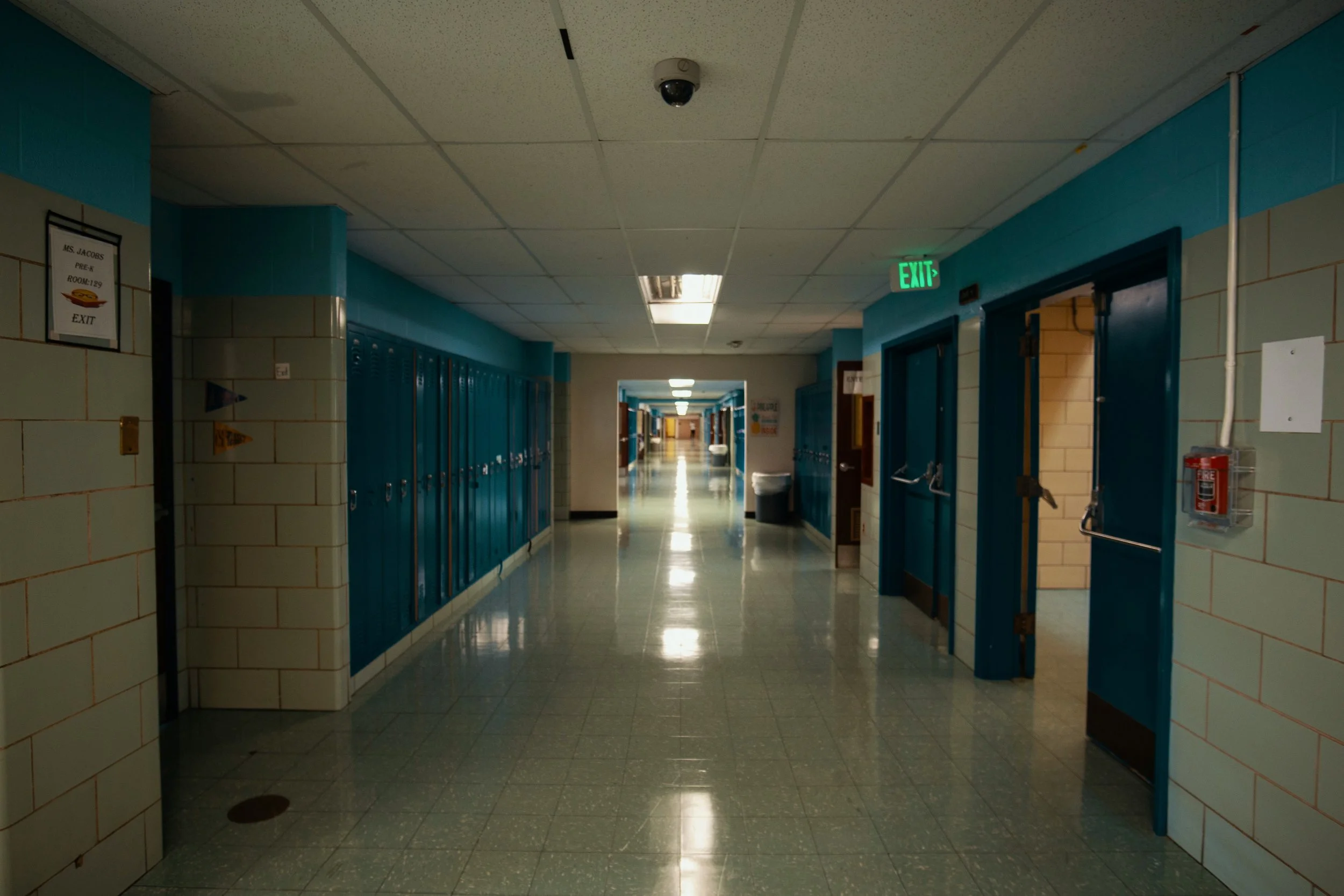
Photo by Daniel McCullough on Unsplash
