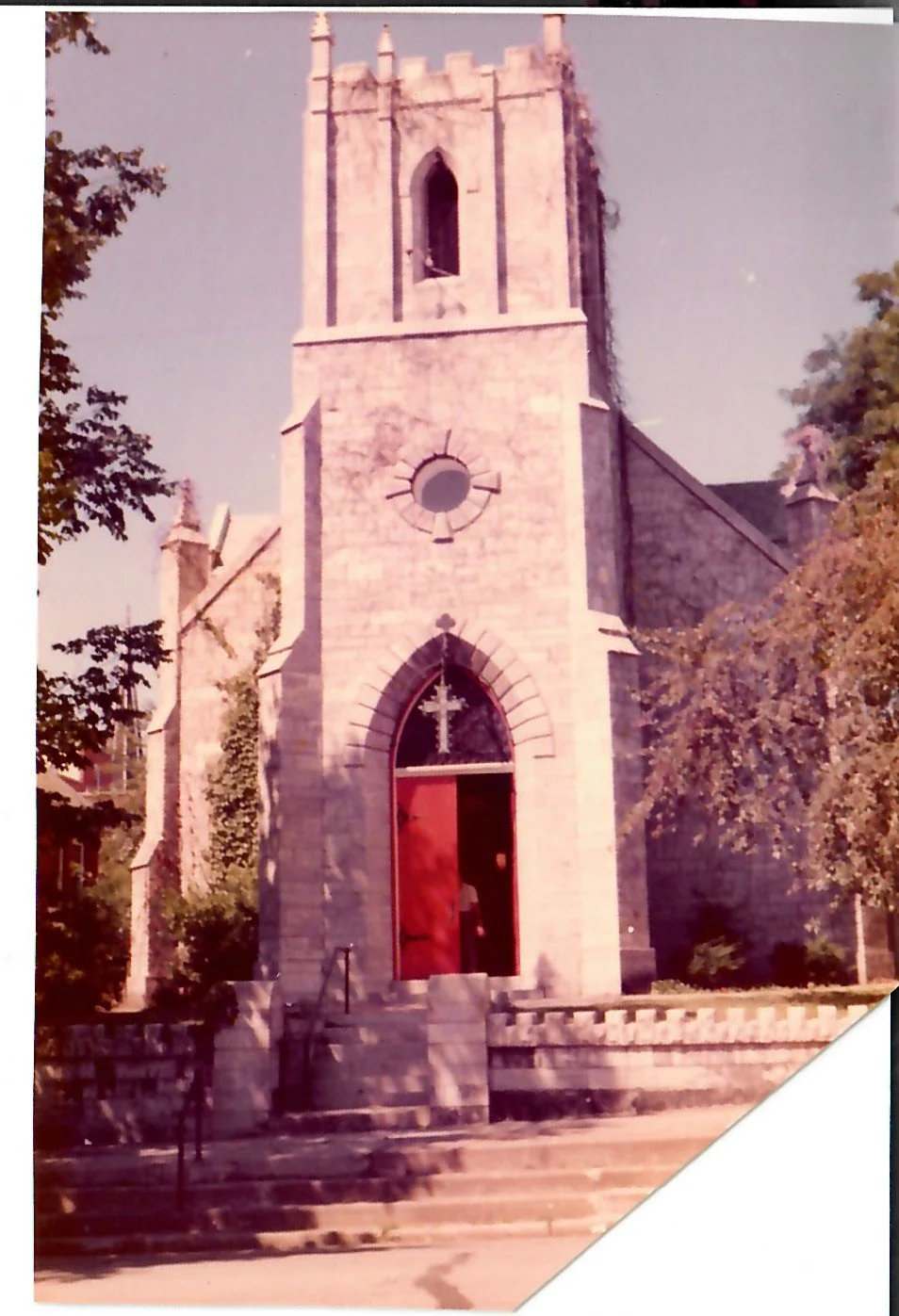
We were living in Hannibal, Missouri,
when I began to take my writing seriously.
In Hannibal, Missouri,
I could buy Mark Twain Fried Chicken
or I could have my roof repaired
by the Mark Twain Roofing Company,
but if anyone still alive in that town
had ever written more
than a grocery list,
I never met them.
I had no teacher,
no writers’ group,
I didn’t know another writer.
Not sure I’d ever met one.
My only resource, the public library.
So, I visited again and again and again,
bringing home armloads of picture books.
(I tried picture books first
because I had no idea
how technical
and difficult
they are.)
Gradually, I grew frustrated.
I moved up the stacks
to juvenile novels.
I knew nothing about those either,
not the contemporary ones.
I’d grown up in a small town with a tiny library—
and no library at all in my school—
so mostly I’d read my mother’s childhood books:
the Little Prudy series, the Little Colonel series,
Little Women, Little Men, Jo’s Boys.
In my version of The Bobbsey Twins,
they wore high-button shoes.
(My Sunday school teacher once
gave me a brand-new Nancy Drew novel,
but my mother sniffed at it.
“What girl,” she said,
“could run around
doing things like that?”)
I kept exploring until I came, at last,
to a shelf labeled NEWBERY AWARD.
I had never heard of the Newbery Award,
but someone liked these books,
so I took a few home.
Took them home and read them,
opening a door where I hadn’t known
a door could exist.
What did I learn?
That literature for children is truly literature!
That I could write seriously for a child.
That the honesty that called to me
was not only permitted,
it was required.
In Hannibal, Missouri,
without a teacher,
a writer’s group,
or even another writer,
I found my literary home.
All that remained was the doing.
Ah … the doing.
